
On Tuesday, Sept. 18, 2018, the Greater Washington Partnership issued the briefing paper Rethinking the Bus: Five Essential Steps for Improving Mobility in the Capital Region. The super-regional business group advocates for investments that would prioritize and facilitate bus transportation, which is estimated to carry approximately half of the public transit trips in the region. Specifically, the group recommends:
- Optimizing routes
- Making space for the bus
- Making boarding faster
- Making buses easy to use
- Measuring and reporting on performance
The study was profiled by the Washington Post and Greater Greater Washington.
This report coincides with two new strategic bus planning studies that are just underway.
Metro is conducting a Bus Transformation Project, which aims to “create a bold, new vision and a collaborative action plan for the future of bus in the region. The project will explore all factors that influence the quality of bus service, from technology and transit priority, to funding structures and service provision roles.” (More on the study from WTOP.)
Meanwhile, the City of Alexandria and DASH are developing a new vision for the Alexandria transit network. According to a city press release, “the Alexandria Transit Vision Plan will redraw the city’s bus network to better serve current/future transit demand, and to better reflect community priorities for transit service.” The planning study will kickoff with a joint meeting of the Alexandria Transportation Commission and Alexandria Transit Company (DASH) Board on Thursday, Sept. 27, 2018 at 6:30 pm in Room 1101 of Alexandria City Hall, 301 King Street.
All of these studies come at precarious times for transit providers. Ridership of many bus systems, including Metro and DASH, is trending downward. In April, the American Public Transportation Association authored the report Understanding Recent Ridership Changes, which identifies four main factors:
- Erosion of time competitiveness, particularly as buses are stuck in the same traffic as private automobiles
- Reduced affinity for transit, including competition from ride hailing services such as Uber and Lyft and other mobility options
- Erosion of cost competitiveness, particularly due to fuel prices that are much lower than historic highs
- External factors, including availability of parking, and perceived safety and security of transit
From 2012 to 2015 (before moving from Old Town), I was a regular bus commuter on Metro’s 11Y, which runs from Mount Vernon through Alexandria to Farragut Square in Washington, DC. It provides an excellent alternative route to downtown DC for residents living along Old Town’s Washington Street corridor, and its high ridership shows it. The 11Y historically has among the highest cost recovery (fare revenue relative to operations and maintenance cost) in the entire Metrobus system. The bus is routinely standing room only by the time it makes its final pickups along Abingdon Drive in Old Town North. Yet even the express bus–with a fare twice the regular Metrobus and costlier than a Metrorail ride from Braddock Road downtown–bogs down in traffic along the George Washington Parkway and 14th Street.
But that wasn’t always the case.
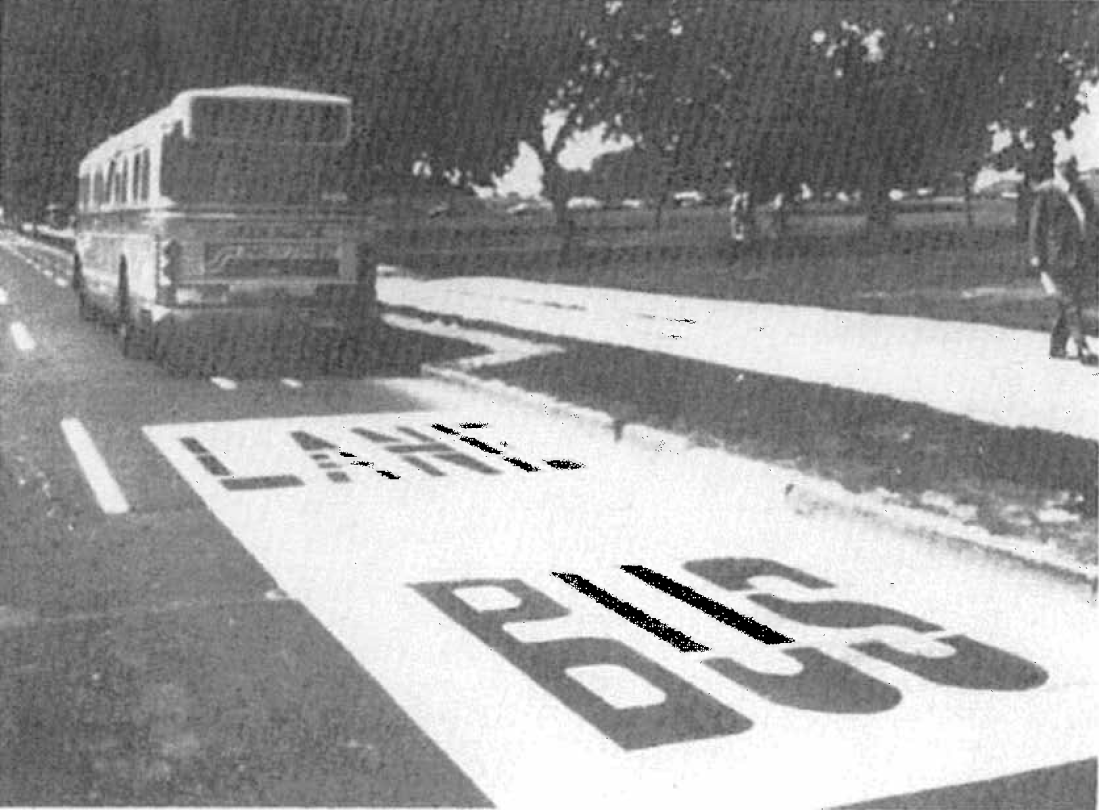
As Metro’s planning department details on its PlanItMetro blog, the region once had a significant network of dedicated bus lanes throughout the region. Over the years, some were converted to high occupancy vehicle (HOV) lanes (including Washington Street through Old Town) and others were abandoned when Metrorail began service in parallel corridors from the mid 1970s through the late 1990s.
Now that Metrorail is approaching its capacity, it’s time to reconsider how dedicated corridors can facilitate bus transportation. Alexandria made a significant investment in the Route 1 Transitway, which offers Metroway express bus service between the Braddock Road and Pentagon City Metrorail stations. Planned investments include a West End Transitway (if funding can be secured) and, someday, a Duke Street Transitway.
In addition, small-scale changes to facilitate buses, like signal timing, or even protected left-turn signals, can help to speed along buses.
In the meantime, reconfigured routes to reflect present-day local and regional transit needs–and a hard look at hours of operation and service frequencies to reflect today’s demands–may be useful outcomes of the local and regional transit strategy plans. Stay tuned for updates.
 PlanAlexandria
One thought on “Better Bus Transit in Alexandria and Across the Region”